
Ela Fitzpayne Noblewoman, A Priest, A Medieval Revenge Murder
After being publicly shamed for an affair with a priest, Ela Fitzpayne was accused of orchestrating a deadly act of revenge in 14th-century England.

England, 1332, a woman named Ela Fitzpayne lived in a manor near the Welsh border. She had a husband. Some land. A priest she should not have been sleeping with. And the story escalated from there.
Which is why we chose this for our bizarre crime in history series.
The Higher Powers Were Angry
The Archbishop of Canterbury found out. His name was Simon Mepham. In 1332, he wrote a letter accusing Ela of “multiple adulteries.”
The wayward priest was named John Forde. The archbishop wasn’t pulling punches, and he named the priest in the letter.
A Punishment Decreed
The archbishop handed Ela Fitzpayne a strange punishment. Every autumn for seven years, she was ordered to walk barefoot down the longest church nave in England.
We can imagine how it might have been. The stone, cold and wet. She would have carried a heavy candle. The wax dripping on her hands. People watching from the pews. Some whispering. Some smiling. And possibly some less than pure thoughts in the minds of others.
A Science Magazine article described it as “a symbolic act designed to mark her shame visibly before society.”
No prison. No fine. Just a cold floor and a very long walk with a very stupid candle.
Defiance Rules
Ela Fitzpayne never performed the punishment, according to National Geographic. She simply ignored the order. Instead, she pretty much gave the bishop the finger.
The archbishop complained about her “spirit of pride.”
The Priest Wasn’t Punished
The priest got off easy. He confessed his relationship with Ela to church authorities. He went back to his life like nothing happened.
He probably ate warm bread that night. Probably slept in a real bed.
Ela, however, didn’t forget. Whatever she thought of the priest’s easy escape, the matter was far from over.
A Real Crime From The Past
But here’s where it gets stranger. This wasn’t even their first crime together. Records dating to 1321 show that Ela Fitzpayne, her husband Robert, and John Forde the priest were accused of conspiring in “a violent raid on a Benedictine priory.”
They allegedly rode there at dusk. They broke down a gate. They took livestock. We can presume there was a ruckus. Animals panicking. Monks running around full of fury and righteous indignation.
Unfortunately, we cannot know for sure.
What we do know, is that Forde was sleeping with Ela and he helped in the crime on holy ground. If nothing else, his loyalties seemed particularly messy. Not to mention the questionable ethics of Ela’s husband.
The Revenge Plan
The archbishop eventually died. Forde was still alive.
According to historical records, Ela was accused of ordering revenge. The message allegedly passed through her brother, Hugh Lovell.
Two former servants got the message. They left the manor. They rode to London.
The Murder
May 1337. A crowded evening near St Paul’s Cathedral. The market probably smelled of fish and sweat. Carts blocked the street. A dog fought a chicken near a gutter. These were common scenes back in the day.
John Forde was walking through the crowd. He didn’t see them coming.
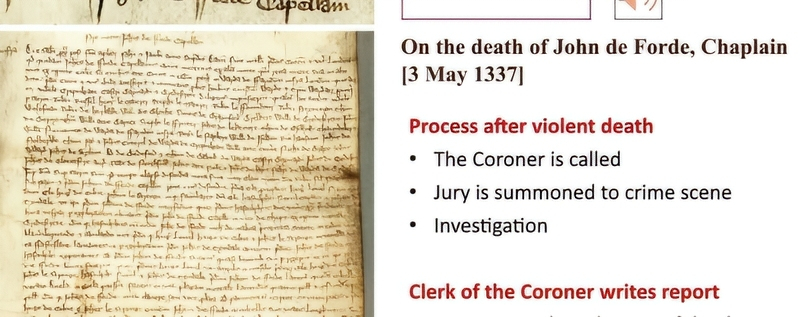
Hugh Lovell walked right up to him. Close. Too close. He pulled a twelve inch dagger. Then, according to the coroner’s report, he “slit Forde’s throat.”
The other two men stabbed his abdomen. Forde went down. His blood ran between the cobblestones. People stepped back. Then they stepped forward, no doubt, like medieval looky-loos.
The Arrest And Trial
Science Magazine called it “a brutal demonstration of aristocratic power.”
An unusually large number of men sat on the coroner’s jury. Way more than was typical for the era. Back then, the jury was made up of people who were actually eyewitnesses, per the University of Cambridge.
Probably, they filed into a room. Sat on hard benches. Swore oaths. Then they said they saw nothing. Every single one of them.
The Science Mag article quoted Professor Manuel Eisner, the Cambridge criminologist who runs the Medieval Murder Maps project.
He said: “The Forde murder reveals how elites can manipulate violence and justice to maintain power.”
He added: “When formal rule of law is weak or compromised, those with status may resort to extrajudicial measures.”
Ela Seemed Unconcerned
Here’s the weird part. Ela didn’t flee. She stayed at her manor. And, she appears to have escaped serious consequences.
Remember, historians believe she orchestrated the killing in broad daylight where everyone could see.
Eisner argued that “public humiliation” and “shaming rituals” often backfire. They “sow deep seated resentment” and “drive acts of violent retribution.”
That’s what historians believe happened here. Not revenge. Restoration.
No one touched Ela. No one asked too many questions. The article noted she “retained her social standing” and “inherited her husband’s estate upon his death.”
A Eventual Suspect Was Convicted
Only one person got charged: a former servant named Hugh Colne. They caught him years later. He probably ended up hanging on a rope. And, Ela likely never gave him another thought.
The priest died on a market street with dozens of metaphorically blind men watching. Ela Fitzpayne died old.
The article called Cheapside “a notorious medieval homicide hotspot” full of “busy markets, guilds, and taverns” where people resolved “petty disputes” and “orchestrated assassinations.”
A man once lost an eye there over a bad loaf of bread. Another got stabbed for stepping on a cloak.
That’s how justice worked in the fourteenth century.
Not with a gavel. With a knife and a shrug.
What are your thoughts? Let us know in the comments belew, and come back here often for all your bizarre crimes in history.
