
AI: Why a 2015 Article Can Be Flagged As Bot Content
A direct podcast quote and a decade-old article both triggered AI detectors, raising questions about how reliable the technology really is.

Content writers have a problem. And no, it’s not about using AI to write articles. It’s about how the detectors work. And as they’ve evolved, they’ve become a huge headache. Read on for a few examples.
A Recent Example
Recently, I wrote an article, and I directly quoted Maurice Benard chatting with his son Joshua on his State of Mind podcast. It came from the start of the 22:12 timestamp marker. This is what I wrote:
Maurice tried to downplay it. “You’ve never seen me go through a manic episode.” Joshua didn’t let it go, saying “But I’ve seen you manic.”
Every single word of that was flagged by ZeroGPT.
Every. Single. Word.
After the third rewrite, the detector still wasn’t happy. At that point I was ready to throw my toys.
Annoying, right? But here’s where it gets truly damning.
The Smoking Gun
In 2015, seven years before artifical writing tools even existed, I wrote an article about anti-poaching. That file still sits on my hard drive.

It’s still up on Medium if you want to check it out. Here’s a section that I wrote back then:
In an effort to gain some cross-border co-operation he invited his opposite number from the Zambian side to accompany him on an operation. The Zambians had a different attitude to wildlife back then. He asked me why we were fighting the poachers and even went so far as to say we should be killing the animals because they are dangerous. I recall sitting in the evening, listening to gun shots. In the morning we deployed a patrol down the river.
I ran that through ZeroGPT. About 40 percent of it got flagged as machine intelligence assisted.
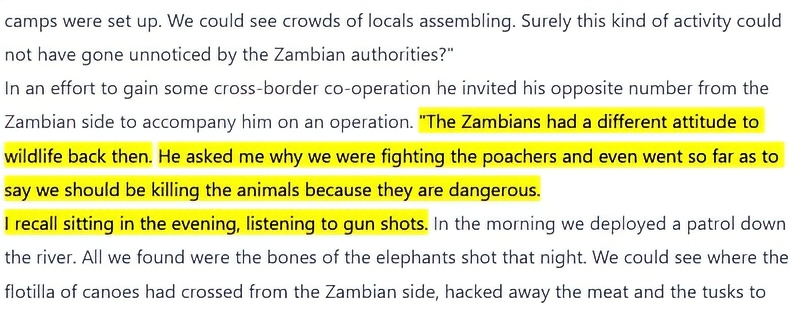
A detector thinks my 2015 writing, written years before ChatGPT existed, was generated by a machine.
You can argue with my opinion.
You can’t argue with a 2015 article getting flagged as containing AI generated content.
Why This Matters
As a Reddit manager for a group of companies, I often check other writers’ work. Why? Because these days, a lot of advertisers and publishers don’t want to be associated with artificial content. They rely on these detectors.
So here’s the dilemma for writers. You write something. You run it through a detector. It gets flagged. You rewrite it. Run it again. Flagged again. Rewrite it again.
Then you factor in the time. And instead of a paycheck, you end up with peanuts and a dry biscuit on the table.
Frustrated? Been there? It’s worse than frustration. AI detectors have no idea who wrote the story, whether a machine or a battered, weary freelancer.
How Detectors Work (And Why That’s a Problem)
From what I can tell, detectors work on mathematical statistics. They look for unpredictable word choice. Sentence length. Variation in structure.
So if you have a consistent voice, a set way of writing your sentences, you might be in trouble. Your rhythm gets penalized.
Initially, people could spot the bot content easily. Overused em dashes. Words like chilling, shocking, heartfelt, emotional, stunning, twist, and bombshell.
But as detectors updated their algorithms, they started penalizing clean, rhythmic prose too.
And that set off publishers and brands relying on increasingly flawed tools.
Sometimes it feels as though the definition of AI writing keeps expanding until it includes ordinary human writing too.
The Absurd Way Around It
Here’s the irony. You can take a flagged passage and ask Deep Seek, Gemini, or ChatGPT what’s wrong with it. It will happily tell you and suggest replacements. You make the change, and suddenly the detector passes it.
Writers are literally using artificial intelligence to write “non detectable” articles. And, it’s so absurd it’s almost laughable.
Some writers joke that the safest approach is to leave the typos in.
That usually passes.
Feeding Our Own Destruction
I ran this by a group WhatsApp chat with other writers. A few people saw the problem, but the solution was nowhere to be found.
The bigger issue? Every time we run our articles through a detector, are we helping it learn how we write? The biggest question seems to be, “are we feeding the machine?”
So maybe the best option is never to run your work through a detector at all, and then hope like crazy that no advertiser checks it.
Fighting for Our Lives
We need to fight for our identity as creators. But how?
Maybe millions of writers need to start screenshotting old articles, written years before ChatGPT, and confront the developers directly. Because right now, it seems that there’s no way out of the rabbit hole.
Detectors keep expanding their definition of “AI writing” until it swallows ordinary human writing too.
Here’s the Problem
- A detector can tell me a direct quote from a podcast was written by a bot.
- It can tell me my 2015 anti-poaching article was partially written by artificial intelligence.
- It can tell me half my own work is AI.
What it cannot tell me, with any certainty, is who actually sat at the keyboard.
And if this whole article gets flagged as AI by a detector?
So be it. I rest my case.
