
Frozen Since 1967: The Extraordinary Story of James Bedford
A dying professor spent $100,000 to be frozen after death. Nearly six decades later, he's still waiting.
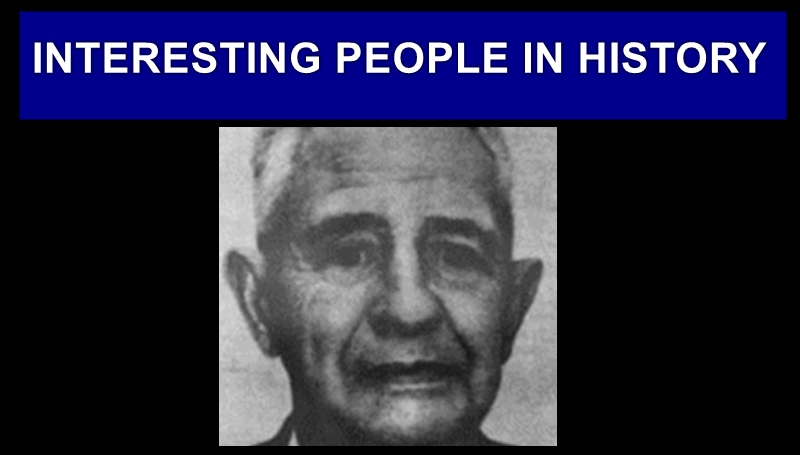
This week’s interesting person from history is James Bedford. People think of him as the “Adam” of the cryonics movement. Back in January of 1967, he became the first human to enter cryopreservation right after legal death. He didn’t just donate his body to science. He threw it into a completely unproven future. Read on to find out more.
A Professor’s Gamble
The story of James Hiram Bedford is a wild testament to faith in technology. His preservation survived family lawsuits, financial ruin, and the collapse of the organizations meant to protect him.
Bedford spent much of his career teaching psychology at the University of California, Berkeley. But his final years brought a terminal kidney cancer diagnosis that eventually spread to his lungs.
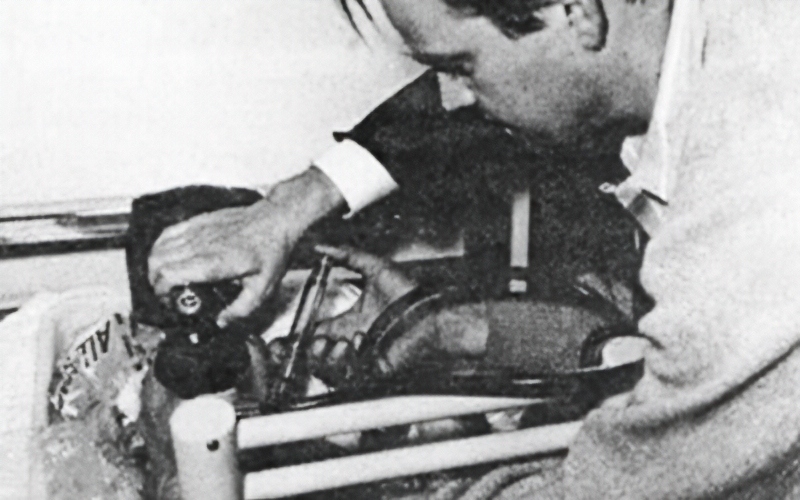
However, he refused to let death be the definitive end of his story. He genuinely believed that advanced medicine would one day cure cancer and reverse the aging process entirely.
According to Alchetron, the Life Extension Society actually offered to freeze someone for free back in 1965. They said that they had “primitive facilities for emergency short term freezing and storing our friend the large homeotherm (man).”
Bedford bypassed that free offer. Instead, he worked with the newly formed Cryonics Society of California. He’d set up a $100,000 trust fund in his will to pay for his own preservation. He was banking on the future, and he paid his own admission.
The Procedure
When Bedford finally died in a Glendale, California nursing home, the scene was far from a sterile, high-tech operation. Per the Cal Alumini Association, Berkley, It was a scramble. The ad hoc medical team included a physician, a chemist, and Robert Nelson.
Nelson was a former TV repairman who ran the Cryonics Society of California. But first, the team ate sandwiches and drank coffee at his bedside. As you do, apparently. Then they launched the experiment.
The procedure was crude by today’s standards. Nurses ran up and down the street collecting ice from neighbors’ home freezers just to keep the body cold.
Nelson’s team injected a primitive antifreeze solution of 15% dimethyl sulfoxide (DMSO) mixed with Ringer’s solution into Bedford’s neck to stave off tissue damage.
They used an “iron heart” machine to circulate oxygen through his body. Then they packed him in dry ice inside a Styrofoam box, and eventually sealed him inside a custom steel cylinder filled with liquid nitrogen.
This makeshift capsule was designed by Edward Hope, a local wig maker who clearly had more useful skills than just styling hair.
They were aiming for suspended animation, but they essentially just froze the man solid.
Seven Moves in 30 Years
Then came the logistical nightmare. Bedford’s trust fund didn’t last. Decades of storage fees and bitter court battles against relatives who desperately wanted him buried completely drained the money.
By 1976, a commercial facility called Galiso Inc. stored him in Anaheim. Their liability insurance company got spooked by the dead body in the building and ordered Bedford out. Since the estate was entirely broke, after insurance issues, Grokipedia noted that institutional funding eroded.
His son, Norman Bedford, stepped up to save James Bedford. For five bizarre years between 1977 and 1982, Norman kept his dad’s capsule hidden away in various self-storage units and private properties across Southern California.
He spent his weekends buying liquid nitrogen and personally pouring it into the capsule to keep his father frozen. If you ever wonder about the ultimate test of filial piety, it might be driving a U-Haul full of your frozen father to a public storage locker.
The Alcor Life Extension Foundation finally stepped in and ended the family DIY project in 1982. Alcor absorbed the ongoing maintenance costs and moved the capsule to their facility in Fullerton, California.
Later, in 1994, Alcor packed up the entire operation and moved to Scottsdale, Arizona. Why? Well, it was to get Bedford and their other patients away from California’s earthquake risks and strict regulators.
Scientific Evaluation
In May 1991, Alcor moved James Bedford from his deteriorating capsule into a modern, multi-patient storage tank. Technicians were able to see what twenty-four years on ice did to a human.
According to Cryonics Archive, former Alcor president Mike Darwin wrote an open letter to Bedford describing the moment, saying, “I cannot describe the feeling of elation I had when I peeled back the sleeping bag that enclosed you and saw that you appeared intact and well cared for.”
The exam showed a heloathy-looking man. H appeared younger than his age. He was 73 when he died. Apart form that, he looked a bit dmaged. His nose partially collapse. And his chest skin cracked from the thermal stress. But his body was mostly intact.
The expriment di8d suggest that liquid-nitrogen storage halted visible decomposition.
Still, his “slow freeze” was miles away from modern vitrification. These days, theyt use an ce-free hardening technique.y James Hiram Bedford remains of hsitical inetrenst. And might not be the best candidate for future revival.
Legacy & Ethics
Bedford became a wonderful example for those folks in the cryonics community.
His case became an important test involving legal right and cpoisces about usin cryopreservation. Even if relatives objected.
Today, James Bedford rests quietly at Alcor in Arizona. He’s the longest-preserved human being.
Your thoughts? Let us know in the comments below, and come back here often for more interesting people in history.
